 ewsba.se
Geopolitical conditions heavily shape oil prices. When conflict erupts near oil-producing regions, prices spike, and naturally, when peace prevails, they fall. Several key mechanisms explain this relationship. Wars embed a "geopolitical risk premium" into oil prices, reflecting fears of supply disruption. Peace eliminates that premium. Conflicts also trigger sanctions that block oil exports; diplomatic resolutions unlock that supply and ease market tightness. War destroys infrastructure and drives away investment, while peace attracts the capital needed to restore and expand production.
Critical shipping routes like the Strait of Hormuz become dangerous and expensive during conflict, raising costs passed on to consumers. Peace restores efficient, affordable transit. Finally, prolonged conflict suppresses economic growth and energy demand, while stable relations enable nations to cooperate on energy policy more effectively. Ultimately, every barrel of oil carries within its price a reflection of the world's stability, and peace lowers that price. Peace may be on the way in the conflict with Iran, and while the current prices will fall at least 10% to 15% on an announcement of a cessation of hostilities, the $50 to $60 level Wall Street had forecast for oil in 2026 is now history.
Oil prices move dramatically on news about the war with Iran.
Many on Wall Street in the energy complex feel that the current price of the oil benchmark could drop 10% to 15% in the event of a peace agreement to end the war.
Wall Street estimated oil price levels for 2026 at the end of last year were $50 to $60 per barrel for WTI. Those estimates are now considered way too low.
The analyst who called NVIDIA in 2010 just named his top 10 stocks and Chevron wasn't one of them. Get them here FREE.
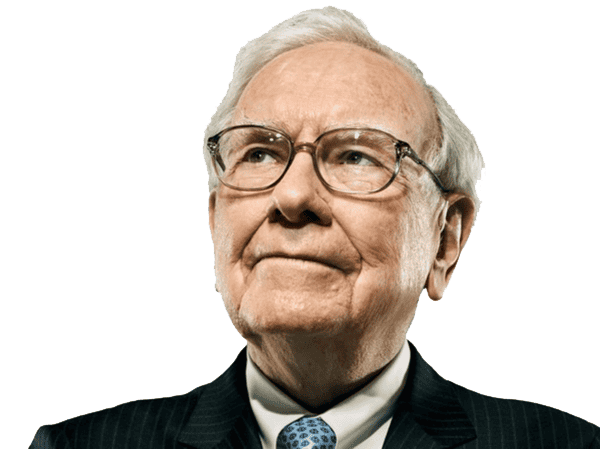
Warren Buffett and Berkshire Hathaway (NYSE: BRK-B) own only two energy stocks, but they are the kind of companies built to survive and are significant holdings in the portfolio. In addition, both are companies that Buffett and, now, Greg Abel will continue to hold indefinitely, as evidenced by Buffett adding more shares of one in a big way in the fourth quarter of 2025 and by continuing to add to the other over the last few years. That turned out to be an incredibly well-timed move as oil has vaulted higher during the war with Iran. While oil has a war premium now, that will go away when and if the United States settles the war with Iran, and there is a good prospect for that, as the fighting has severely constrained the Middle East countries' ability to sustain the conflict much longer.
Most of Wall Street was negative on energy as we finished out 2025, with many analysts indicating that the baseline price for West Texas Intermediate in 2026 would be somewhere in the $50 to $60 range at best. Given the massive changes in the global energy complex since fighting started in late February, most top firms now expect oil to settle in the $70 to $75 range, driven by changes in exploration and production and delivery. One thing is certain: a higher global pricing level will be highly beneficial for the two companies that Berkshire Hathaway owns. Both will still be good long-term holdings for growth and income investors. One caveat for those looking to add energy exposure is to buy partial positions now and wait for a settlement between the U.S. and Iran before buying more shares. While both are off their highs reached when the attack on Iran first unfolded and offer better entry points than two months ago, oil will still drop dramatically when a permanent ceasefire and a solution are reached.
Chevron (NYSE: CVX) is an American multinational energy company primarily focused on oil and gas. This integrated giant is a safer option for investors seeking exposure to the energy sector and pays a substantial 3.79% dividend, which was raised by 5% earlier this year. Chevron operates integrated energy and chemicals businesses worldwide through its subsidiaries. Berkshire Hathaway bought a very well-timed 8 million additional shares in the fourth quarter and now owns 130,156,362 shares, which equals 6.6% of the float and 7.2% of the portfolio.
The company operates in two segments. The Upstream segment is involved in the following:
Exploration, development, production, and transportation of crude oil and natural gas
Processing, liquefaction, transportation, and regasification associated with liquefied natural gas
Transportation of crude oil through pipelines, and transportation and storage
Marketing of natural gas, as well as operating a gas-to-liquids plant
Refining crude oil into petroleum products
Marketing crude oil, refined products, and lubricants
Manufacturing and marketing renewable fuels
Transporting crude oil and refined products by pipeline, marine vessel, motor equipment, and rail car
Manufacturing and marketing of commodity petrochemicals, plastics for industrial uses, and fuel and lubricant additives
It also involves cash management, debt financing, insurance operations, real estate, and technology businesses.
Bank of America has a Buy rating with a $206 target price.
After years of building this position, Buffett and Berkshire Hathaway are finally in the money on this company, which pays a 1.82% dividend. Occidental Petroleum (NYSE: OXY) is an international energy company with assets primarily in the United States, the Middle East, and North Africa. The company is an oil and gas producer in the United States, including the Permian and D.J. basins and the offshore Gulf of America.
Berkshire Hathaway owns 264,941,431 shares, which is a stunning 26.6% of the float and 4.4% of the portfolio.
Occidental’s oil and gas segment explores for, develops, and produces oil (including condensate), natural gas liquids (NGLs), and natural gas. The midstream and marketing segment purchases, markets, gathers, processes, transports, and stores oil (including condensate), NGLs, natural gas, carbon dioxide (CO2), and power. This segment provides flow assurance, maximizes the value of its oil and gas, and optimizes the company's transportation and storage capacity. It also invests in entities that conduct similar activities, including low-carbon venture businesses.
A notable recent development was Occidental’s decision to sell its OxyChem subsidiary to Berkshire Hathaway, with the bulk of the proceeds expected to strengthen the company’s balance sheet and further concentrate its business on oil and gas. The move was especially interesting because Buffett had reportedly long been interested in OxyChem, and Berkshire now owns the business outright. Berkshire Hathaway completed its purchase of OxyChem from Occidental on January 2, 2026, giving Buffett full ownership of the chemicals business while providing Occidental with $9.7 billion in cash to reduce debt and sharpen its focus on energy.
Mizuho has an Overweight rating and a $72 price objective on this stock.
This analyst's 2025 picks are up 106% on average. He just named his top 10 stocks to buy in 2026. Get them here FREE.