 ewsba.se
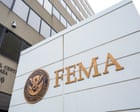
Workers wrote ‘Katrina declaration’, warning that funding cuts made US dangerously unprepared for natural disasters
Fourteen employees with the US Federal Emergency Management Agency returned to work this week, after spending eight months on administrative leave for signing a public letter criticising the Trump administration.
The so-called “Katrina declaration”, sent last August to members of Congress and a federal council formed to help determine Fema’s future, was written as a rebuke from the workers about the dangerous erosion in US capacity to prepare for and respond to natural disasters.
Timed with the 20th anniversary of Katrina, the catastrophic storm that killed 1,833 people and devastated parts of New Orleans and the Gulf coast in 2005, it served as a warning that the stage was set for history to repeat itself.
More than 190 current and former Fema employees signed on to the letter. Thirty-six signed their names. Those who were still actively employed at the agency were put on indefinite paid administrative leave one day later.
The group was reinstated briefly in December before being returned to leave, a hiccup a DHS spokesperson at the time blamed on “bureaucrats acting outside of their authority”.
Abby McIlraith, a Fema emergency management specialist who is among the reinstated workers, said the group received emails on Wednesday instructing them to return to work. On Thursday she was back at the Fema office in Maryland, waiting to regain access to her work devices. “I feel pretty vindicated,” she said. “We did the right thing.”
Their reinstatement marks one of many reversals made by new homeland security secretary Markwayne Mullin – a signal he may be moving away from the harsher approach toward Fema taken by his predecessor, Kristi Noem, before she was fired as DHS leader.
Pressed by Democratic senator Andy Kim of New Jersey about the suspended staffers’ fate in his Senate confirmation hearing last month, Mullin called whistleblower retaliation unlawful and vowed to work “within the law”.
Mullin has also reversed Noem’s policy that her office approve any DHS expenditure over $100,000, and has released more than $1bn in backlogged Fema grants and reimbursements to states, tribes and territories since being sworn in last month.
The $100,000 policy was one of several actions criticized in the public letter. Others included the DHS decision to reassign some Fema employees to Immigration and Customs Enforcement; the failure to appoint a qualified Fema administrator as stipulated by law; and cuts to mitigation programs, preparedness training and the Fema workforce. Many of the concerns outlined in the letter remain.
Hundreds of millions of dollars in national preparedness funding was cut in 2025, and Fema lost roughly a third of its full-time staff – experienced leaders among them – to firings, retirements and resignations. The letter also called for Fema to be taken out from under DHS and restored to a cabinet-level agency.
The agency is still severely hindered for upcoming high-risk seasons for hurricanes, extreme heat and fires, according to staffers and emergency management experts.
“I am very happy these career civil servants are getting their due and getting back to work,” said a former Fema employee who spoke to the Guardian under the condition of anonymity. “But it might be too little, too late.”
The worst effects, experts say, may not reveal themselves until catastrophe strikes.
Already, there have been severe delays in aid distributed to communities affected by Hurricane Helene, which struck the US south-east in 2024. It took administration officials more than 72 hours to authorise the deployment of federal search-and-rescue teams after the Guadalupe river in Texas surged into a summer camp and through nearby communities last July, a flood that left more than 135 people dead.
When deadly tornadoes hit the midwest and Great Plains in March, state and local search-and-rescue teams had to deploy without key tornado-tracking tools, because a $200,000 Fema contract was allowed to lapse in February.
The former employee said: “When you think about potential lives lost and the people who weren’t made whole because they didn’t get the assistance they needed because there were less people on the job … what did any of this accomplish besides putting us in a weaker position when it comes to responding to disasters?”
Donald Trump, meanwhile, has repeatedly called for states to take on more responsibility with disaster response and preparedness, but most are not equipped to pick up the slack. It could take years to make key changes, according to Bill Turner, the emergency management director at the Connecticut department of emergency services and public protection, who also serves as the resilience committee chair for the National Emergency Management Association, a non-profit professional association for US state and territory directors.
Trump’s budget proposal for next year would slash grant programs relied on to increase preparedness at the state and local level by $1.3bn if adopted.
Fema’s future could become more clear next week, when the Trump-appointed Fema Review Council will present its highly anticipated and months-overdue recommendation report. It’s expected to propose sweeping changes to the agency.
McIlreath said she’s paying close attention to what changes the council proposes and is undeterred by what happened to her and her colleagues. She said: “Until FEMA capabilities are restored and disaster survivors are served I’m going to continue speaking out.”
The Associated Press contributed reporting